Of all the questions we answer in the driveway, “how long will it last?” is the one where the honest answer is longest. Every roof type has a commonly cited lifespan, and every one of those numbers assumes a good installation and a climate kinder than the Florida coast. Here is what we have seen across three generations of roofing, in Palm Coast since 1989, along with the ranges you will see quoted elsewhere.
What is the lifespan of a new roof?
It depends on the material and the installation. In our experience on the Florida coast, an architectural shingle roof commonly lasts about 15 to 20 years, standing seam metal 40 years and more, and the tile itself 50 years and more, though tile underlayment wears out sooner. Slate and copper are measured in many decades.
Those are commonly cited ranges, not promises. Here is how each one plays out in Florida.
Architectural shingle: roughly 15 to 20 years. Shorter on the oceanfront, where sun and salt are hardest on asphalt, and longer inland on a well-ventilated attic. A word on warranties: a manufacturer’s “limited lifetime” warranty is typically prorated after the early years, and it is not a lifespan. Nobody should read it as a promise that the shingles will last your lifetime.
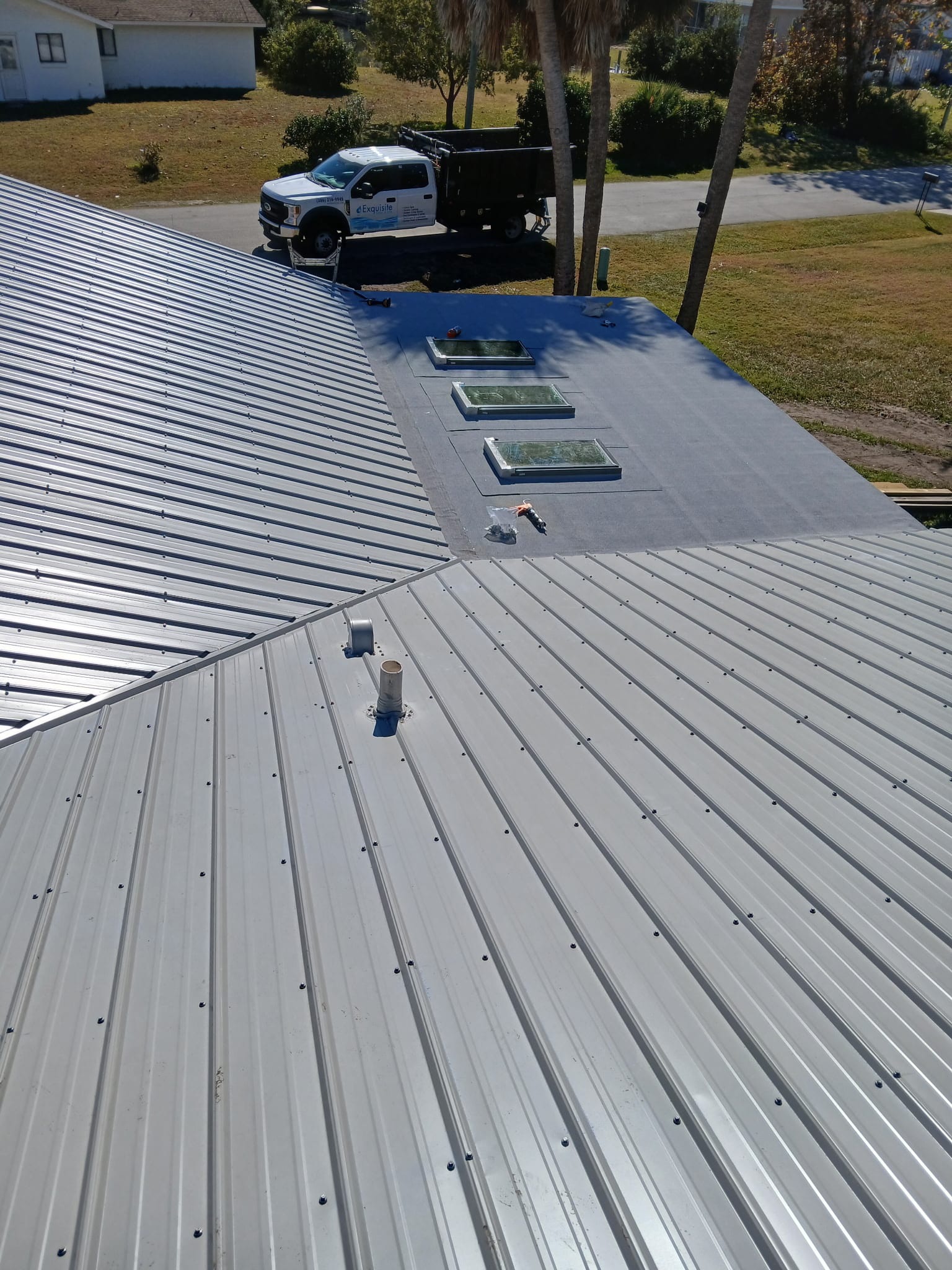
Standing seam metal: commonly 40 years and more. Less on the oceanfront, where the finish and the fasteners take the salt first. A metal roof is only as long-lived as its coating and the metal its fasteners and trim are made of.
Concrete and clay tile: the tile commonly 50 years and more. The underlayment under the tile is what wears out, typically well before the tile. A 25 to 30 year old tile roof often needs the underlayment replaced and the tile relaid, not new tile. That is a big difference in cost and in what ends up on your house, and it is one reason tile is worth installing well the first time.
Slate and copper: the longest of all, measured in many decades. We have installed both: slate tile at World Golf Village in St. Johns County, and copper on specialty and custom work.
Flat roofs (TPO, modified bitumen): a shorter service life than pitched systems, and very dependent on drainage. Water that sits is what shortens a flat roof.
What type of roof lasts the longest?
By the ranges commonly cited, and in our experience, slate, clay tile and copper sit at the top, measured in many decades. Concrete tile and standing seam metal come next, then architectural shingle. On the coast, though, the installation and the underlayment decide more than the material. A long-lived material installed carelessly will fail long before a modest one installed right.
We covered how salt air, sun and wind treat each material in our article on tile vs. metal vs. shingle on the Florida coast, so we will not repeat it here. The short version: underlayment, flashing, fastening and the crew matter more than the name on the bundle.
What is the best roof material for Florida?
There is no single best. What the Florida Building Code requires everywhere is wind-rated, product-approved materials and fastening. Shingle costs least and lasts shortest, tile is heaviest and longest-lived, and metal is light, very wind-resistant and long-lived at a higher cost. The house, the neighborhood and how long you plan to stay decide the best one.
On product approval: as we understand it, Miami-Dade and Broward counties have their own high-velocity hurricane zone rules, while Flagler County uses Florida Product Approval listings. Either way, the material and the way it is fastened both have to be approved.
The trade-offs, in more detail:
- Shingle. The lowest cost and the shortest life. Its wind rating depends on the nailing pattern, which is why certification matters. We are manufacturer-certified Atlas installers. See our shingle roofing page.
- Tile. The heaviest and the longest-lived. The structure has to be checked before tile goes on a house that did not have it, and the tile and the underlayment have to work together, with the underlayment being the part that eventually needs renewing. We have laid hundreds of squares of tile in Hammock Dunes. See our tile roofing page.
- Metal. The lightest, very wind-resistant and long-lived, at a higher cost than shingle. In salt air, the finish and the fastener metal decide how it ages. See our metal roofing page.
How we recommend one: we start with a free inspection, look at the structure, the roof shape and what your neighborhood expects, and ask how long you plan to stay. The house and the neighborhood decide. We are not attached to any one material, and we will tell you which roof we would put on it if it were ours.
What time of year should you replace your roof?
Florida’s dry season, roughly November through April, is the best weather for a tear-off. Hurricane season runs June 1 to November 30, according to the National Hurricane Center, so plan to have a replacement finished before June 1. A planned replacement in the dry season beats an emergency one in September.
The reason is not only weather. In our experience, after a storm every roofer in the county is booked for months and the permit offices slow down. A roof that was on your someday list in May becomes urgent in September, at the moment when crews and materials are hardest to get. If your roof is near the end of its life, the calm months are when to deal with it.
That does not mean we stop in summer. We work all year and schedule around the afternoon rain. If your roof is leaking now, do not wait for the dry season; call us.
Between replacements, a yearly roof tune-up before June 1 catches the small things (a cracked tile, a lifted shingle, a tired pipe seal) that shorten a roof’s life. Our hurricane season roof checklist covers what you can check yourself from the ground.
Getting the full life out of a roof
The roofs we see reach the long end of their ranges have a few things in common: they were installed with the right underlayment and the right fastening, the flashing was done patiently, nobody walked them carelessly, and somebody looked at them once a year.
Our core crew has worked together for more than 30 years, with over 40 years of hands-on roofing experience between us, and we guarantee to beat any competitor’s warranty. If you want to know how much life your roof has left, book a free roof inspection. Contact us or call (386) 864-9600, and we will call you back within one business day. If it is time, our roof replacement page explains how we do it.