Emergency roof repair in Palm Coast, when it can't wait.

Water coming in is not a wait-and-see problem. Call us, tell us what you're seeing, and we'll get the roof dried in and then repaired properly by our own crew.

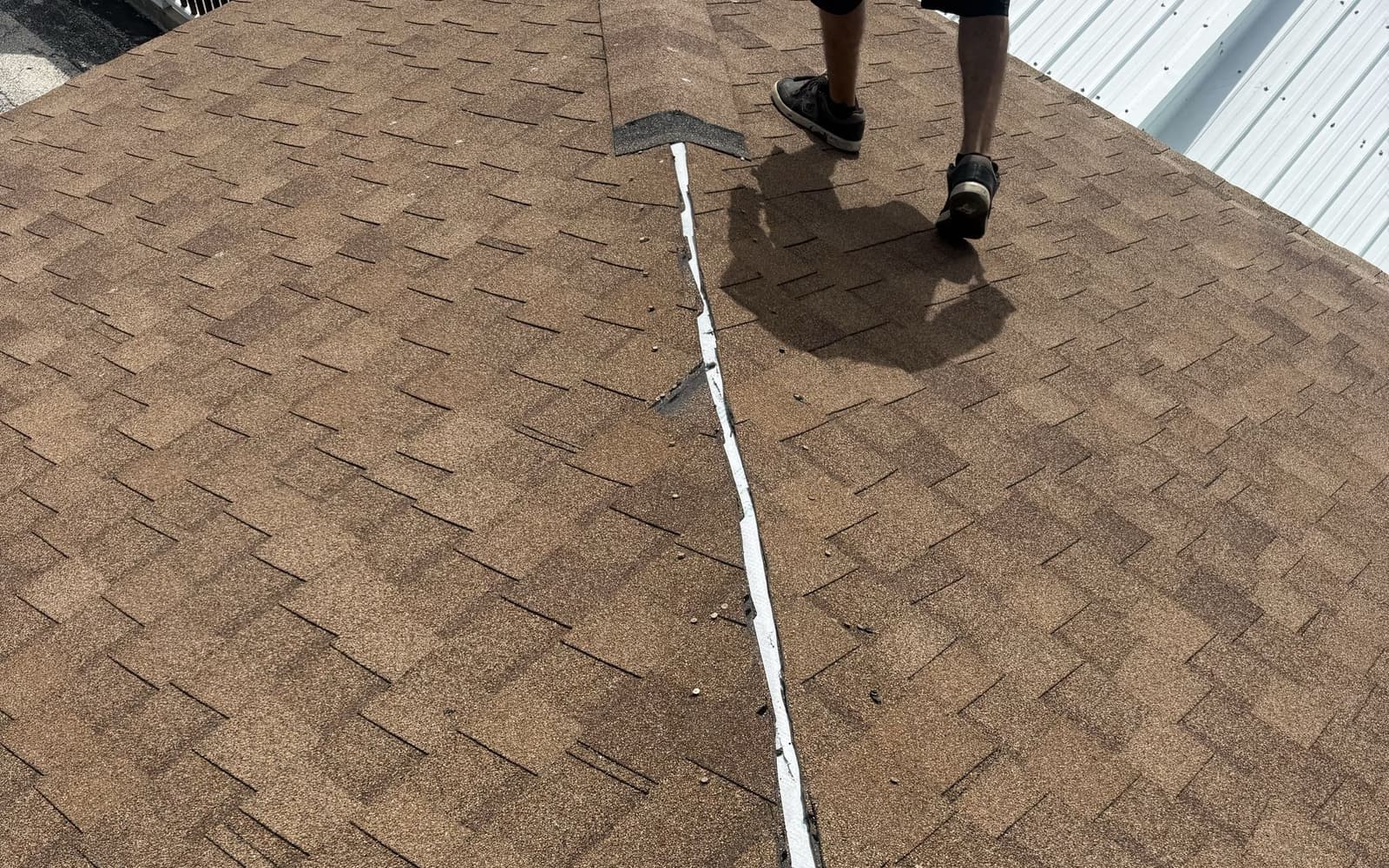
A First Coast Roofing crew member walking a shingle roof toward an open seam along the ridge that needs repair

The next hour

If water is coming into your house right now, a few things matter more than anything else.

  1. Move what you can. Get furniture, rugs, electronics, and paperwork out from under the leak. Water damage to belongings adds up faster than the roof repair itself.
  2. Catch the water. A bucket or storage bin under the drip, and a towel or tarp on the floor around it. If a ceiling is sagging with trapped water, a small hole at the lowest point lets it drain where you want it to instead of where it decides to.
  3. Photograph everything. The ceiling stain, the drip, the wet floor, and anything you can safely see outside: missing shingles, slipped tile, a branch on the roof. These pictures matter later if you make an insurance claim.
  4. Stay off the roof. A wet roof, a loose tile, or a soft spot in the decking can put you in the hospital. Leave the climbing to people with the equipment and the experience.
  5. Call (386) 864-9600. Tell us what you’re seeing and where you are. That’s all we need to get started.

What we do when we arrive

Our first job is to stop the water. If weather or daylight makes a permanent repair impossible on the spot, we dry in the damaged area with a secured tarp or temporary underlayment so nothing else gets in. That buys time to do the real repair correctly instead of in a hurry.

Then we find the source. Water almost never comes into the house directly below where it gets through the roof. It travels along the underlayment, down a rafter, across the top of the drywall, and drips somewhere that has little to do with the actual opening. Our crew has worked together for more than 30 years, and tracing a leak back to a cracked tile, a split pipe boot, a lifted shingle, or a gap in the flashing is the part of the job that experience is for.

Once we know what failed, we photograph it, explain it in plain terms, and write up an itemized quote for the permanent fix. The repair itself is done by our own crew, with materials matched to your existing roof. Read about how a standard roof repair goes with us if you’d like the full picture.

Storm and hurricane damage

The Florida coast gives roofs a hard life. Tropical-storm winds lift the edges of shingles and work at ridge caps. Wind-driven rain pushes under tile and finds flashing that was fine for twenty years of ordinary weather. Falling limbs crack tile and punch through decking.

After a big storm, the damage you can see from the driveway is rarely the whole story. A few missing shingles usually means more are loose. A single slipped tile often means others nearby have shifted. We look at the entire roof, not just the obvious spot, and we tell you what we found whether it’s good news or not. If you’re unsure whether your roof took damage at all, a free roof inspection after the storm will settle it.

Documenting for your insurance claim

Emergency work and insurance claims go hand in hand, and we handle both. As we find damage we photograph it, note what failed and why, and keep the record organized. When your adjuster comes out, we can walk the roof with them so the claim reflects what the roof actually needs rather than what’s visible from the ground. Our insurance claim help page explains how that works.

Who shows up

First Coast Roofing is a family business on its third generation of roofers, based in Palm Coast. The same core crew has worked together for over 30 years, with more than 40 years of hands-on experience between us. We’re Florida Certified Roofing Contractor #CCC057958, fully insured, and manufacturer-certified Atlas installers.

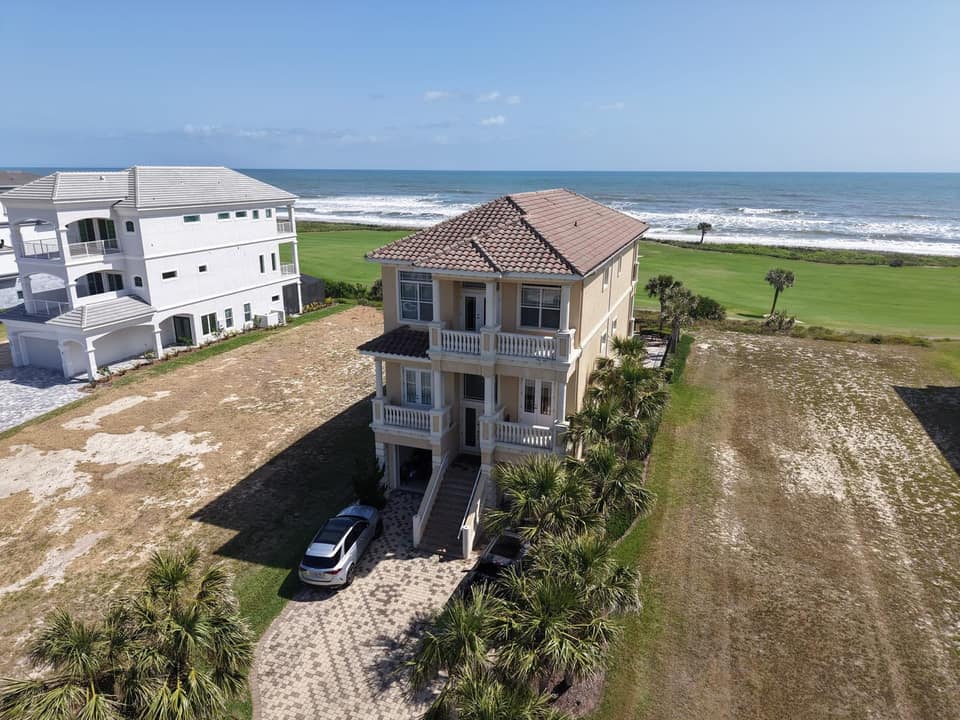
We’ve done this kind of work on the hardest roofs in the area, including broken tile and a new chimney 56 feet up on an oceanfront Ocean Hammock home. Every repair we make is backed by our guarantee to beat any competitor’s warranty. When it’s leaking, call. When it’s fixed, it stays fixed.
Related work

All work

What happens when you call.

The same six steps on every job.

  1. Your request reaches the family

    Your message or call lands with us, not a call center or an answering service. If water is coming in right now, call (386) 864-9600 and say so, and we treat it as the emergency it is.

  2. We call you back within one business day

    One of us calls to ask about the roof: its age, what you have noticed, and whether a storm or an insurance claim is involved. Then we set an inspection time that works for you.

  3. A free inspection at your home

    We get up on the roof and photograph what we find: the material, the flashing, the penetrations, the valleys and the edges. You are welcome to be there, but you do not have to be.

  4. One written quote, with the photos

    You get a straight answer: repair it, tune it up, or replace it, with one written price and the photos that explain it. No pressure. If insurance is involved, we help with the insurance claim.

  5. We schedule the work and do it

    The same crew that has worked together for 30 years does the job, under our Florida license, with the permit pulled. We protect the property and clean up before we leave.

  6. Walkthrough and warranty

    We show you the finished roof and hand over the warranty paperwork. We do the highest-quality work in North Florida and our warranty backs it: we guarantee to beat any competitor's. We put our money where our mouth is, and we stay a phone call away.

Questions we hear

All questions
What should I do while I wait for you to arrive?

Move furniture, electronics, and anything you care about out from under the leak, and put a bucket or bin under the drip. If the ceiling is bulging with water, you can poke a small hole at the lowest point with a screwdriver to let it drain in a controlled way. Photograph everything, inside and out, before anything is cleaned up. Please stay off the roof. A wet roof is dangerous even for people who do this every day.

Do you do emergency tarping and temporary dry-ins?

Yes. When the weather or the hour doesn't allow a permanent repair, we secure the damaged area with a tarp or temporary dry-in so no more water gets in. Then we come back and do the real repair once conditions allow and you've had a chance to look at the written quote.

My roof was damaged in a hurricane. Should I call you or my insurance company first?

Call us first to stop the water, then open the claim. Getting the roof dried in quickly limits the damage inside the house, and insurers generally expect you to take reasonable steps to prevent further damage. We photograph and document the damage as we find it so your adjuster has a clear record of what the storm did. Our insurance claim help page explains the rest.

Is a leak really an emergency if it's only a small drip?

Treat it like one. A small drip is water that has already gotten through the roof surface and the underlayment, and it is soaking decking, insulation, and drywall on its way to you. The sooner the source is found, the smaller the repair. Call and describe what you're seeing, and we'll tell you what we think.

What areas do you cover for emergency roof repair?

Palm Coast, Flagler Beach, Bunnell, and the rest of Flagler County, plus St. Johns, Putnam, Volusia, Seminole, Lake, and Orange counties. Call (386) 864-9600 and tell us where you are and what's happening.

Ready when you are.

Quotes and inspections are free, and when you call you talk to the family, not a call center.

Call (386) 864-9600 Free Quote