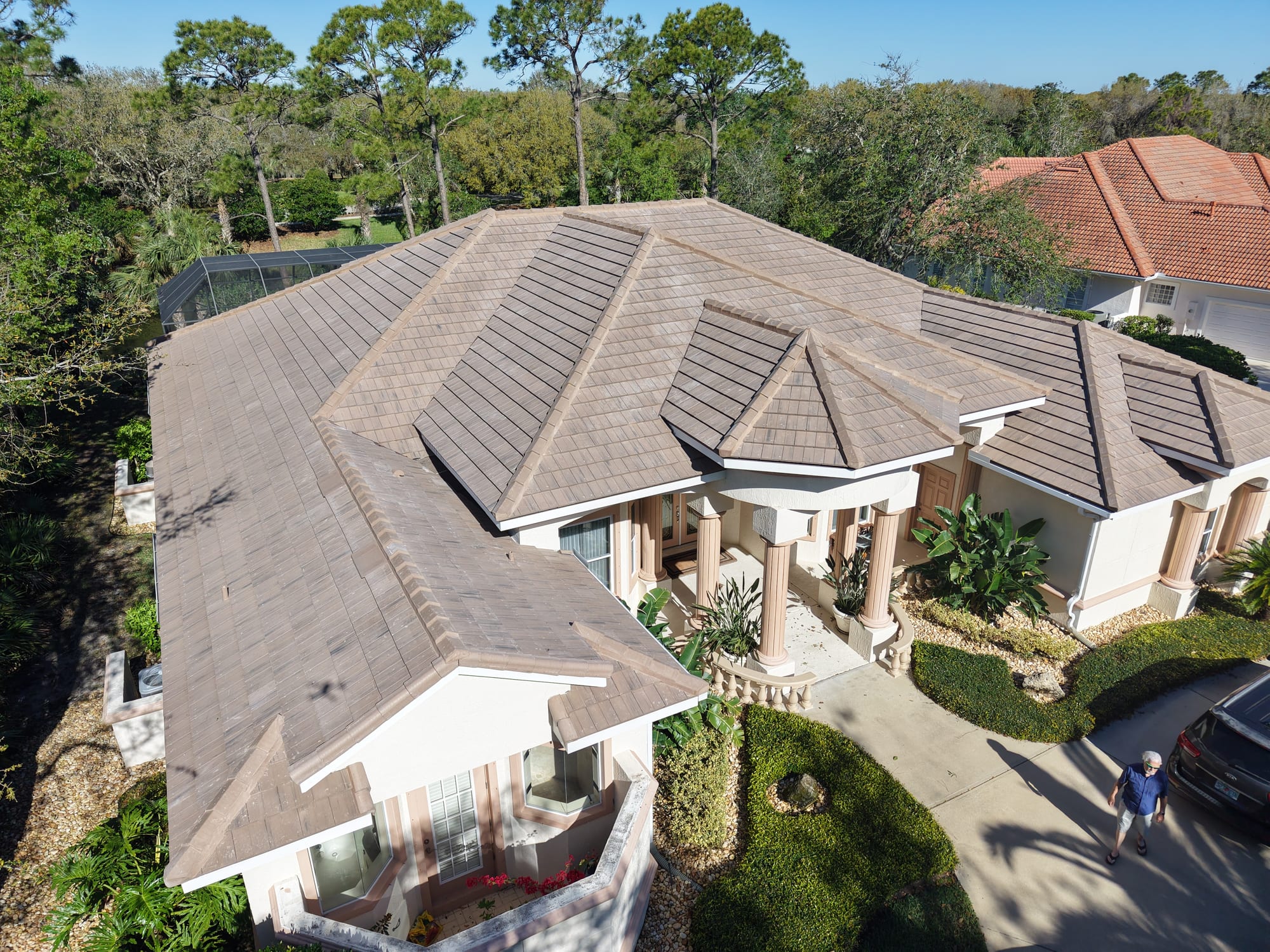
The leading tile expert in North Florida
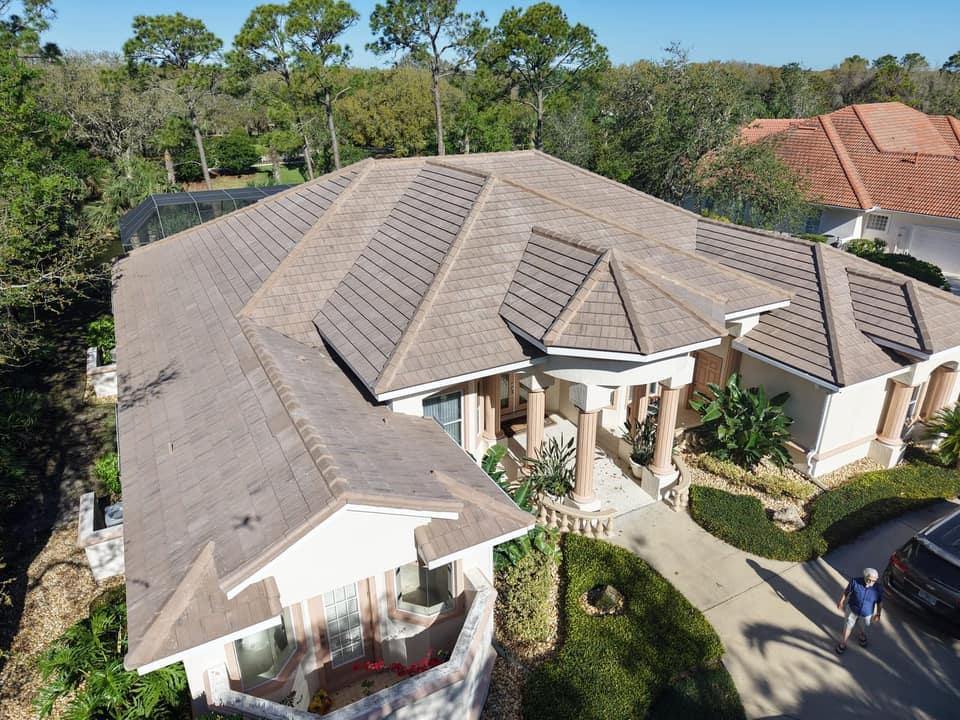
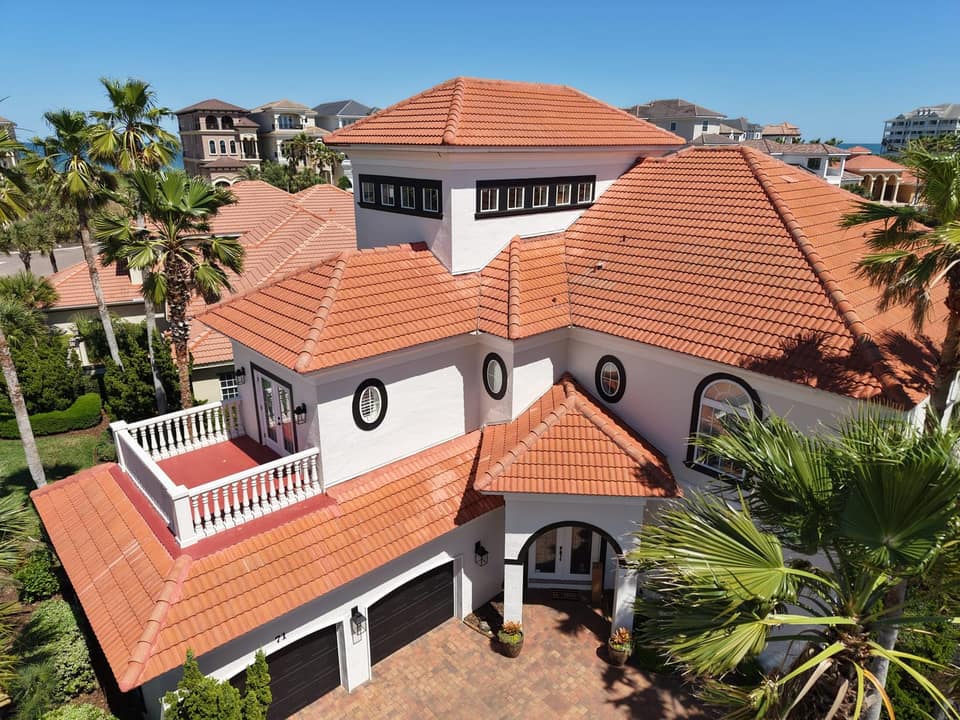
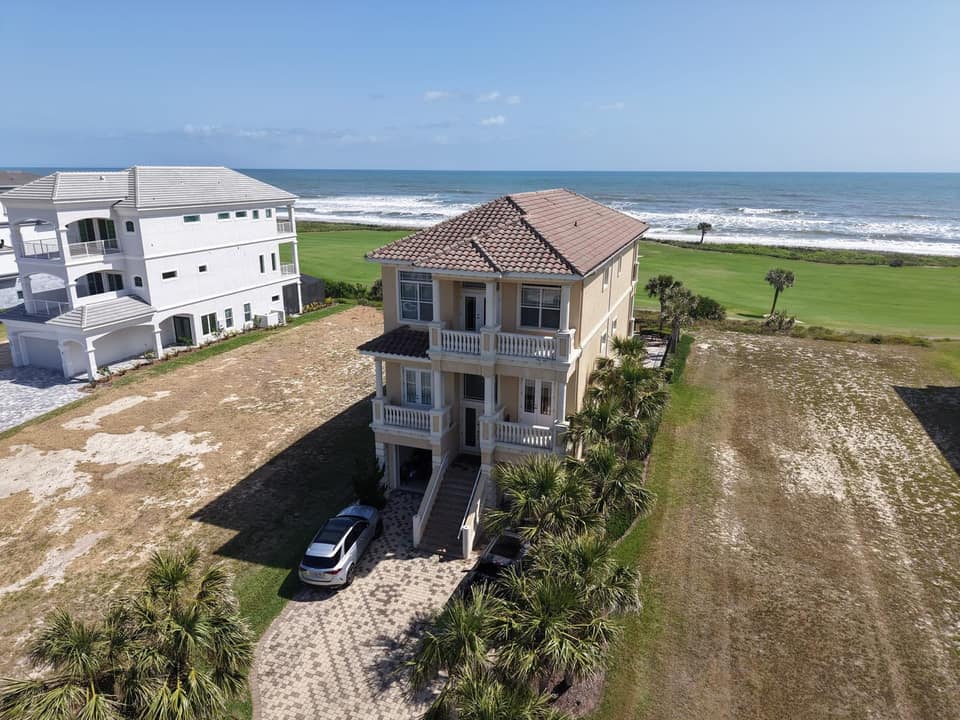
Tile is what our family does best, and we are the leading tile expert in North Florida. We’re third-generation roofers based in Palm Coast, and our crew are tile experts on concrete, clay and slate tile: installed, repaired and replaced, on everything from a single cracked piece to a full coastal roof built from the deck up. Here is the work behind that claim.
- Hammock Dunes. Hundreds of squares of tile in Hammock Dunes (a square is 100 square feet of roof), and five of the ten roofs we have permitted in Flagler County since 2023 were in Hammock Dunes.
- A full tile system. A 7,100 square foot Westlake concrete tile roof in Hammock Dunes, rebuilt from the deck up.
- Slate. Slate tile at World Golf Village in St. Johns County.
- The Virgin Islands. We travel to the U.S. Virgin Islands to put tile on villas for billionaires. Nobody sends that far for a roofer unless the roofer is the best at it.
- Every kind of tile. American-made concrete tile, imported French tile, German tile and slate. If it is made to go on a roof, we have laid it.
- Height. Tile repair and fascia at 52 feet and a chimney rebuild at 56 feet on Ocean Hammock homes.
- The people. Three tile specialists on our crew, including Jay, who has laid tile with us for more than 30 years.
If you have a tile roof, the best place to start is a free inspection from the crew that lays it.
Why tile belongs on the coast
Concrete and clay tile is the roof you see on the big homes along the Hammock for a reason. Summer UV doesn’t cook it the way it does lighter materials, salt air doesn’t corrode it, and the mass of each piece gives it a steadiness in wind that shingle can’t match. Heavy rain runs off the profile and into the gutters. A tile roof that’s built right will outlast most other roofs on the same street.
It’s also the material that looks like it belongs in Palm Coast. Flat-profile, barrel, and S-tile in the colors coastal communities expect, and many of those communities have architectural guidelines on exactly that. We’ll help you choose a tile and color that fits the rules the first time.
The tile and the underlayment work together
Most roofers will tell you the underlayment is your real roof and the tile is just the finish. We disagree. On a tile roof done right, the tile and the underlayment work in unison. The tile is the first line of defense and should be doing most of the work; the underlayment is there for the day a tile breaks, not for every afternoon storm. Water should not be expected to show up beneath the tiles on a regular basis. When we put on a tile roof, we put it on tight.
That’s why we care about every layer, including the ones you’ll never see:
- Tile set tight. Tiles snug to one another, hips and ridges closed properly, and courses laid so wind-driven rain has nowhere to get in. A tight tile roof keeps the underlayment dry, and a dry underlayment lasts.
- Weep holes. Tiles do break eventually. We always advocate for weep holes at the eave closures so any water that gets beneath a broken tile drains down and out instead of sitting on the underlayment and finding the decking.
- Underlayment. The right product for a tile system, lapped correctly, and sealed at every penetration, so it holds when it’s called on.
- Flashing. Walls, chimneys, valleys, skylights, and pipe penetrations are where tile roofs leak. Metal flashing has to be formed and integrated into the underlayment, not just tucked under a tile.
- Fastening. Every tile is secured to the deck the way the manufacturer and the coast’s wind demand, with the right fasteners and attachment for the profile and slope.
- Workmanship at the edges. Eaves, rakes, hips, and ridges are where a tile roof shows its craftsmanship, and where a careless crew leaves gaps for wind-driven rain.
Our crew has laid tile together for more than 30 years. That’s the number that matters on a tile roof, because there’s no shortcut around experience when you’re cutting tile to a hip line or setting a ridge that has to hold through a tropical storm.
Keep untrained feet off your tile
The fastest way to ruin a tile roof is to let someone walk on it who doesn’t know how. We’ve seen entire neighborhoods in the Hammock with their roofs torn up, and the cause wasn’t a storm. It was pressure washing crews who had never been taught to walk tile, cracking thousands of tiles across street after street while cleaning them. Every one of those cracks is a leak waiting for the next heavy rain, and most homeowners never knew until the ceiling stained. If anyone needs to be on your tile roof, make sure they know to step on the heads of the tiles where they overlap, never in the middle of the pan. Better still, have a roofer do it.
New tile roofs and tile replacement
When a tile roof reaches the end of its life, the tile often still looks fine from the street. What’s done is usually a combination of broken tile nobody caught, fastening that has let go, and underlayment that spent years wetter than it should have. A full roof replacement on a tile home means stripping to the deck, repairing any rot, building a new waterproofing system, and laying new tile over it, tight.
The 7,100 square foot Westlake concrete tile roof we built in Hammock Dunes is a good example of a full tile system done from the deck up: a flat-profile, American-made concrete tile on a large coastal home, chosen for the wind, rain, and UV it would face.
Tile repair, including high up
Not every tile problem is a replacement. Broken tile from a dropped limb or a careless service tech, slipped tile after a storm, a cracked flashing at a chimney: these are repairs, and tile repair is something we do often. We match the profile and color as closely as the market allows, replace the tile and whatever underlayment was damaged beneath it, and leave the roof looking like nothing happened.
Coastal tile homes are tall, and the roof is often the hardest part of the property to reach. In Ocean Hammock we’ve replaced 1,300 square feet of tile and a home’s full fascia at 52 feet, working from a driveway barely wide enough for the lift, and replaced broken tile and built a new chimney at 56 feet on another. Height and access change the planning, not the standard.
Repair or replace?
A free inspection answers this. Isolated broken tile on a roof with sound underlayment is a repair. Multiple leaks in different areas, underlayment that crumbles when it’s touched, or tile sliding because the fastening has let go: that’s a roof telling you it’s time. We’ll show you photos of what we found and give you a straight answer, and if storm damage is involved, we’ll help with the insurance claim.
Why Palm Coast homeowners trust us with tile
We bring more than 40 years of hands-on experience across the crew. We’re Florida Certified Roofing Contractor #CCC057958, fully insured, and we guarantee to beat any competitor’s warranty. We work Flagler, St. Johns, Putnam, Volusia, Seminole, Lake, and Orange counties, and we’ve roofed some of the largest homes in Florida and the U.S. Virgin Islands.
See the work for more tile roofs, or contact us for a free quote on yours.