A city named for a shingle maker
Bunnell takes its name from Alvah Bunnell, who made shingles for a living, which makes it a fitting place for a roofing company to work. Settlers came in the 1880s, it became a town in 1913 and a city in 1924, and it has been the Flagler County seat ever since. About 3,276 people lived inside the city at the 2020 census, and the courthouse, the county offices and the permit counter are all here.
A small town spread over a lot of ground
Bunnell is small by population and huge by acreage. Annexations have pushed it to about 139 square miles, which makes it the second-largest city in Florida by area. A lot of that ground is pasture and pine, but the new subdivisions are arriving. Grand Reserve, the golf community, has about 260 homes built from 2009 to 2023, with more going up in 2026. The Reserve at Haw Creek is a master plan of about 2,800 acres with some 6,100 homes planned.
New homes come with builder roofs, usually architectural shingle. They are fine for their first years. What wears them down out here is open exposure: few trees, long fetches of wind across the fields, and full sun on every slope. A yearly check catches lifted tabs and failing pipe boots before they leak.
Out past the pavement: Daytona North
South of State Road 100 and west of County Road 305 is Daytona North, which most people in the county call the Mondex. About 2,800 people live there on lots of half an acre to an acre and a half, and nearly all of the residential streets are dirt. Homes range from single, double and triple-wide manufactured homes to concrete-stucco and wood-frame houses, built anywhere from 1968 to today. There are no fire hydrants, and homes run on wells and septic.
Roofing here is its own kind of job. Material deliveries have to make it down a sand road, and after a hard rain some of those roads are soft. Manufactured homes and metal roofs are common, and an older one needs a careful look at the framing and attachment before anything new goes on, and a re-roof on a home on a well and septic system means planning where the crew sets up and where the debris goes. We plan all of that before the first truck rolls.
Why metal fits west Flagler
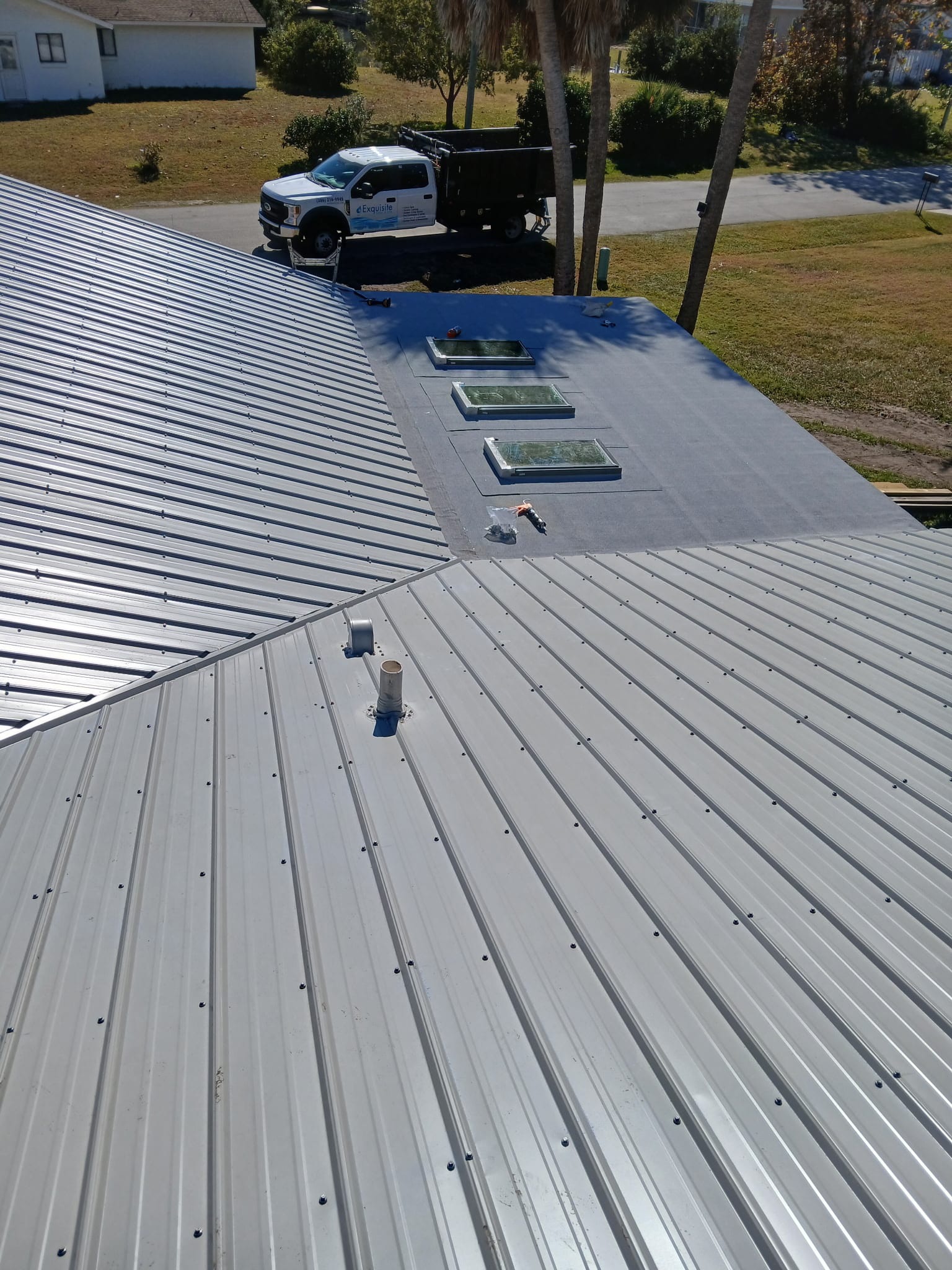
Metal shows up all over rural Flagler for good reason. It sheds heavy rain fast, handles open-field wind well when it is fastened right, and lasts a long time with little upkeep. It also suits barns, shops and outbuildings, which a lot of acreage properties have. Our metal roofing page explains the panel types we install and what we look for in the fastening and the trim. If a shingle or a metal roof is at the end of its life, a full roof replacement starts with a free inspection.
Espanola, Korona and Plantation Bay
Northwest of town, Espanola grew up in the 1880s as a crossroads and then got bypassed by the highway; its schoolhouse, listed on the National Register in 2020, is the county’s last one-room school. Korona was settled in 1914 by Polish families, and their St. Mary Catholic Church, a Carpenter Gothic building from the same year, still stands.
To the south, Plantation Bay straddles the Flagler and Volusia line. It is a gated community with 45 holes of golf; roughly 970 of its homes are on the Flagler side, and listings put the typical Flagler-side home in the 2010s.
Permits close to home
Flagler County Central Permitting is at 1769 E. Moody Blvd in Bunnell, and it permits unincorporated county property, including Daytona North, Espanola and Korona. With Bunnell’s city limits growing through annexation, we check whether your parcel is in the city or the county before we file anything.
We are based next door in Palm Coast, and Bunnell is part of our home county of Flagler. Ask us for a free inspection or call (386) 864-9600; we call back within one business day.