Two kinds of metal roof
Most metal roofs in our area are one of two systems, and the right one depends on the building and what you want from it.
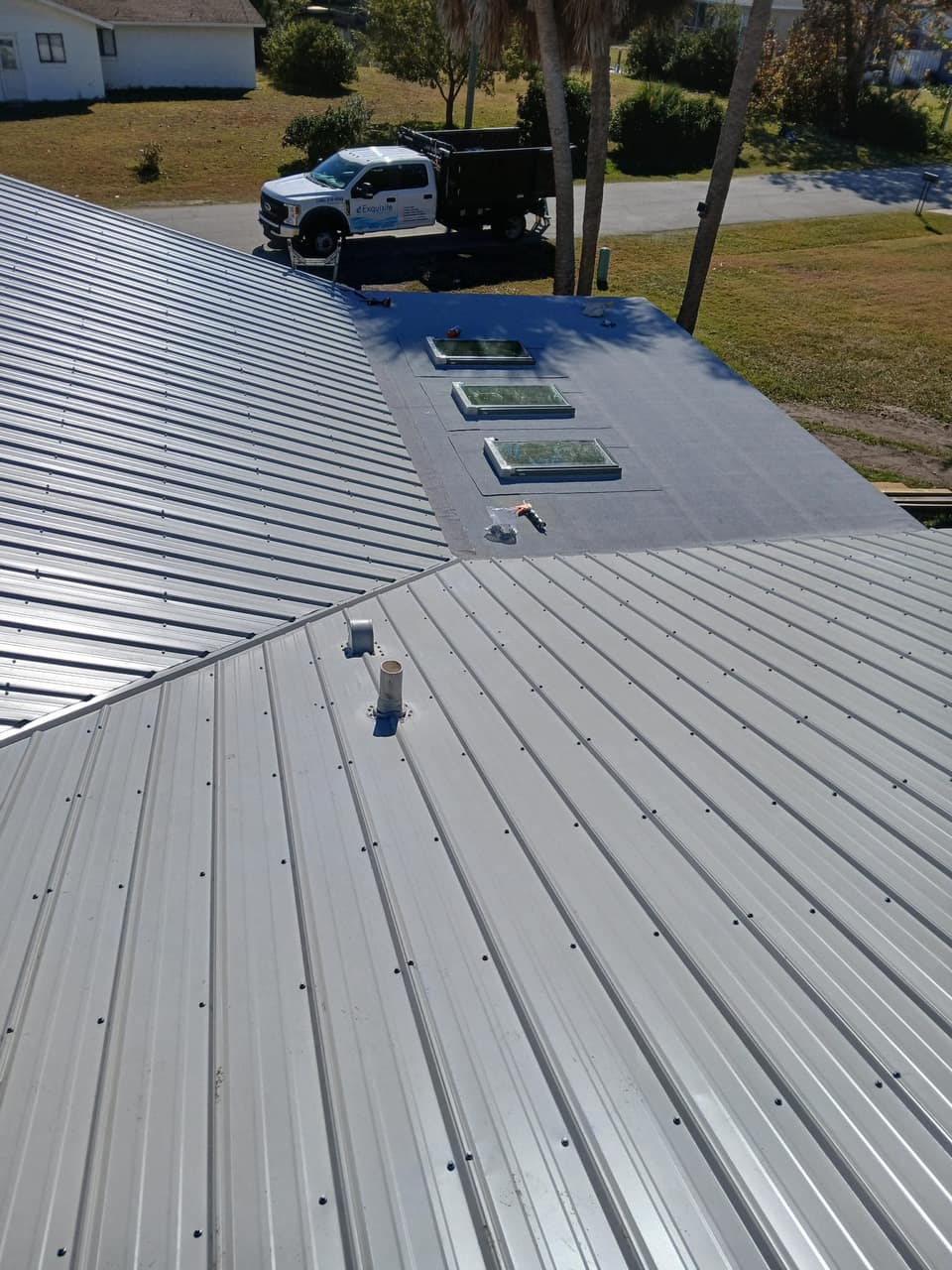
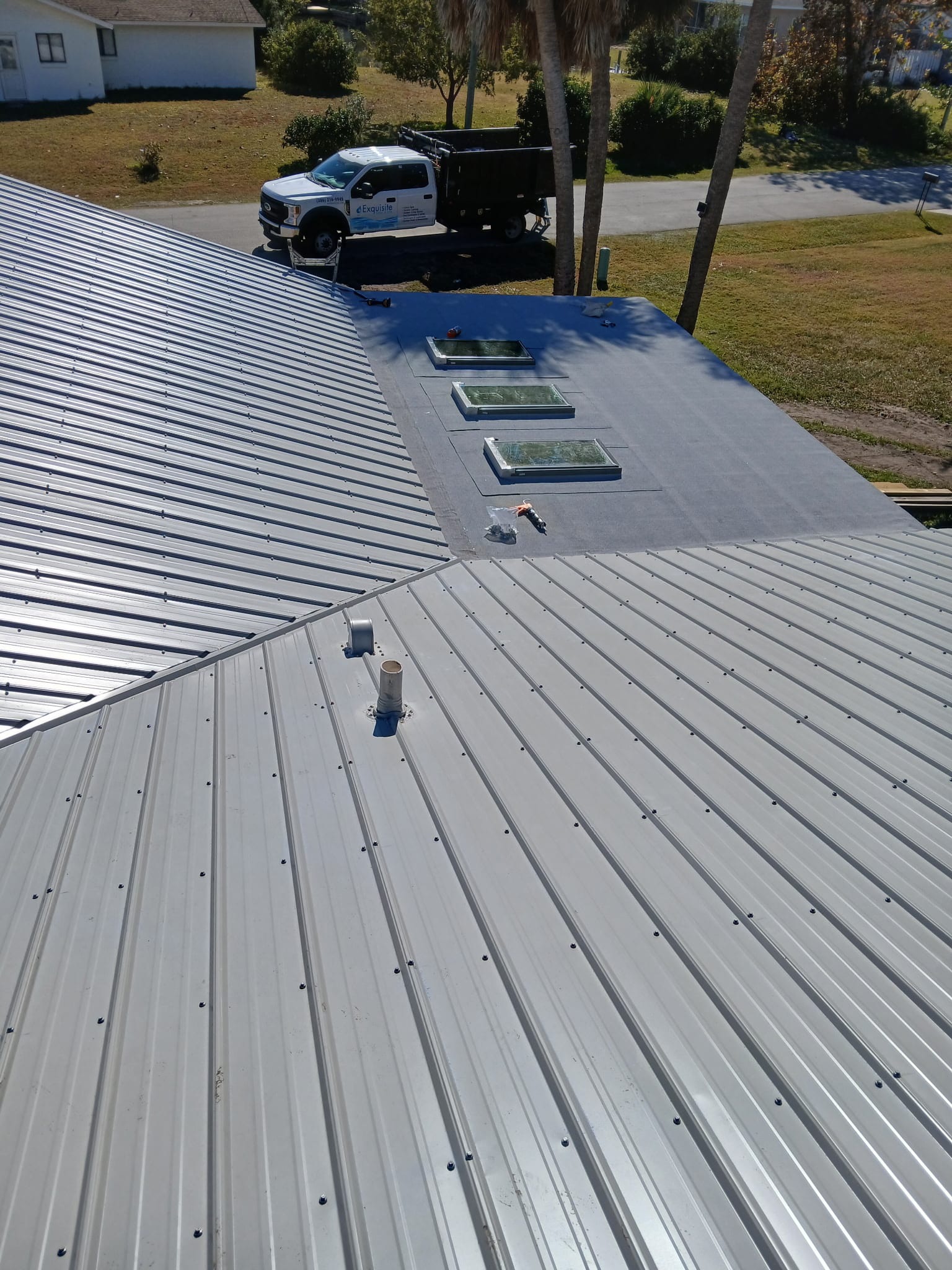
Farm panel, sometimes called exposed-fastener or ribbed panel, is the straightforward system: long panels with raised ribs, screwed through the panel into the deck with gasketed fasteners. It’s economical, quick to install, and gives a home the clean farmhouse look a lot of people are after. The 3,200 square foot farm panel roof we installed in Ormond Beach is a good example: ribbed panels on a home, laid out so the lines run true from eave to ridge.
Standing seam hides the fasteners. Panels lock together at raised seams and attach to the deck with concealed clips, so there’s no screw head exposed to weather, and the panels can expand and contract in the heat without working a fastener loose. It takes more skill to install, and it’s the system we’d point you toward for a premium home or a low-slope roof where water sits longer.
How metal handles Florida
Heat, rain, wind, and salt are the four things a Palm Coast roof has to beat, and metal does well on all of them. Reflective and lighter-colored panels send a good share of summer heat back up instead of into the attic. Water sheds off metal faster than off almost anything else. Properly fastened panels are among the best roof surfaces in wind. And with the right coating, metal stands up to the salt air that works on everything along the coast.
Metal is also the lowest-maintenance roof we install. There’s no granule loss, nothing for algae to take hold in, and nothing to crack. Keep the panels clear of debris, have the fasteners and sealant checked periodically on a farm panel system, and that’s about it. Metal typically outlasts shingle by a wide margin.
What a metal install actually involves
A metal roof is only as good as the layers beneath it and the details around it. Ours go like this:
- The deck. We strip the old roof and inspect every sheet of decking, replacing anything soft or delaminated before a single panel goes down.
- Underlayment. A membrane made for use under metal, because the panels get hot and the wrong underlayment breaks down beneath them.
- Panel layout. We measure and plan the panel run before cutting anything, so the ribs or seams line up at hips and valleys and the last panel at the rake isn’t a sliver.
- Trim and flashing. Eave trim, rake trim, ridge caps, valley metal, and flashing at every wall and penetration, formed to the panel profile. This is where metal roofs leak when they leak, and where we spend our time.
- Fastener placement. On a farm panel roof, every screw goes in the right spot on the panel, driven to the right depth so the gasket seals without crushing. Over-driven and under-driven screws are the most common mistake we see on other crews’ metal roofs.
Metal, tile, or shingle?
If you’re weighing materials for a roof replacement, the honest summary is this. Shingle is the most common roof in Florida and suits almost any house. Tile is the heaviest and most permanent look, and what many coastal communities expect. Metal weighs far less than tile, outlasts shingle, and sheds water and heat better than either. It also looks different from both, so the architecture of the house and any community guidelines come into the decision. We’ll tell you which one we’d put on your house, and why.
Homes, barns, and commercial buildings
Metal works on more than houses. Barns, workshops, and outbuildings on acreage are a natural fit for farm panel. Low-slope commercial roofs often go standing seam. On a home, metal can cover the whole roof, or just a porch, a bay, or an accent section set against shingle or tile.
Why Palm Coast calls us for metal
We’re a family business on our third generation of roofers, based in Palm Coast. The same core crew has worked together for more than 30 years, with over 40 years of hands-on roofing experience between us. We’re Florida Certified Roofing Contractor #CCC057958, fully insured, and we guarantee to beat any competitor’s warranty. We work Flagler, St. Johns, Putnam, Volusia, Seminole, Lake, and Orange counties, and the U.S. Virgin Islands.
Contact us for a free quote, and we’ll come look at the building and talk through which system fits it.