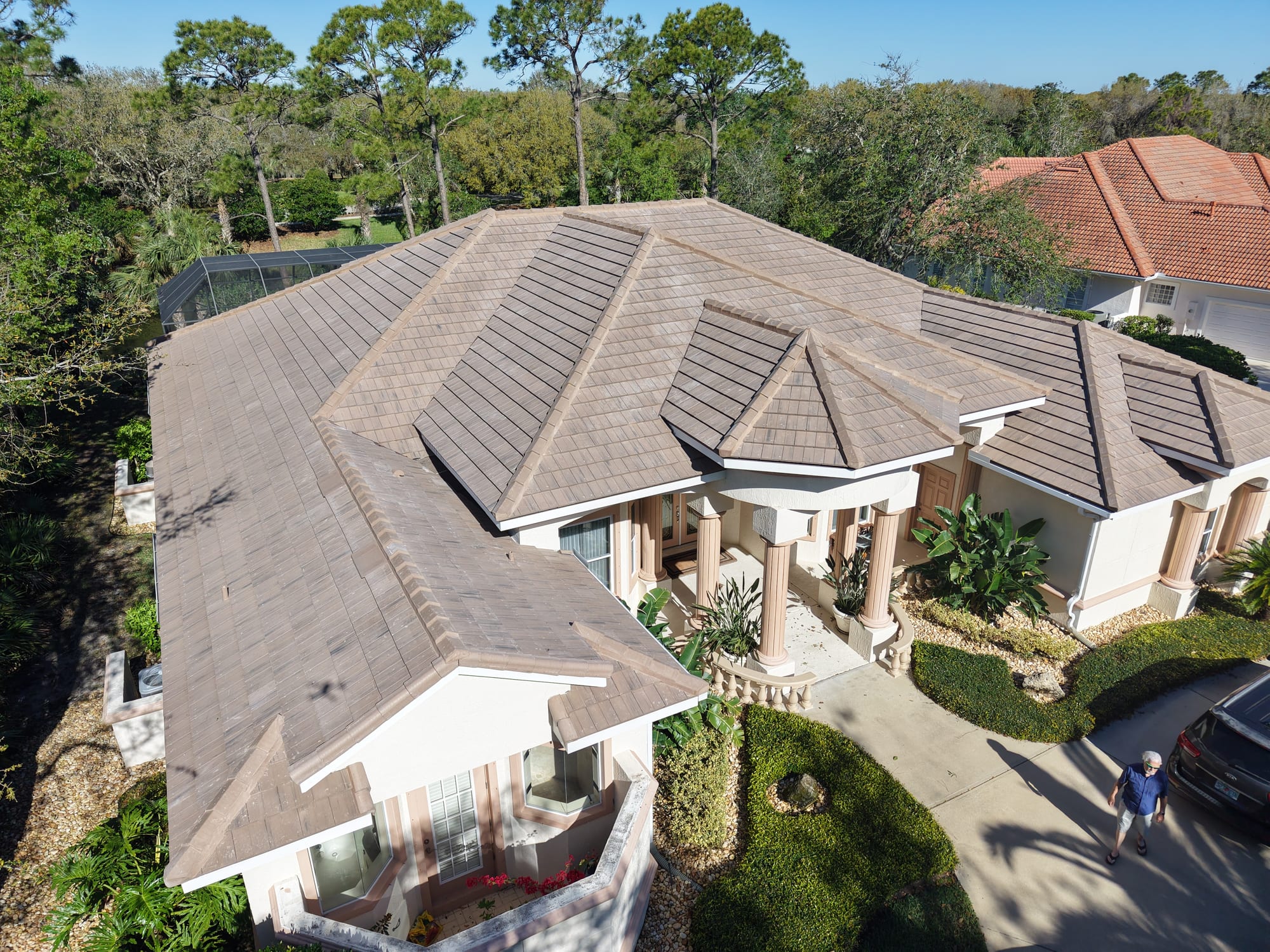
One island, two addresses, one permit office
Ask a Hammock homeowner where they live and you may hear Palm Coast or Flagler Beach. Mailing addresses on the island use Palm Coast 32137 at the north end and Flagler Beach 32136 toward the south, but neither city reaches across the water. The Intracoastal Waterway is Palm Coast’s eastern edge, so the Hammock is unincorporated Flagler County from the Intracoastal to the surf.
That matters on permit day. A Hammock re-roof goes through Flagler County Central Permitting at 1769 E. Moody Blvd, Building 2, Suite 103, in Bunnell (386-313-4003, Monday to Friday, 8:00 to 4:30), filed online through the county’s CD-Plus system. The contractor’s packet includes the permit application, the county’s roofing supplement form, a copy of the warranty deed, and a Notice of Commencement on larger jobs. We put that packet together; you sign where the county needs your signature.
Built for the debris line
Under the 2023 Florida Building Code, the windborne debris region takes in land within a mile of mean high water wherever the design wind speed is 130 mph or more. On the Hammock that means most of the barrier island. Coastal Flagler homes are designed to a 130 mph ultimate wind speed, and the county publishes a wind speed line map that we check for each address. In practice it means fastening schedules, underlayment and edge metal get more attention here than they would five miles inland.
Salt is the slower threat. It does not care how good the tile looks. It goes after fasteners, drip edge and the sealant at flashing and penetrations, and it gets there years before the roof covering wears out. A yearly Roof Tune-Up is built for that kind of quiet damage.
Under the oaks of A1A
The island is named for its coastal oak hammock, a rare stretch of live oak canopy along A1A, which became part of a federally designated All-American Road in 2021. The oaks are the reason the drive is beautiful and the reason valleys and gutters fill with leaves. Shaded slopes stay damp longer, and limbs come down in every named storm. We clear valleys and drains as part of the work rather than treating them as an extra.
The bridge that opened the north end
The north end’s growth traces back to one decision. ITT announced Hammock Dunes in September 1982, the county approved the 2,258-acre development in 1984, and the Hammock Dunes Bridge was completed in 1988. The bridge tied the north end of the island to Palm Coast, and Ocean Hammock was planned ten years later, in 1998.
Communities on the island
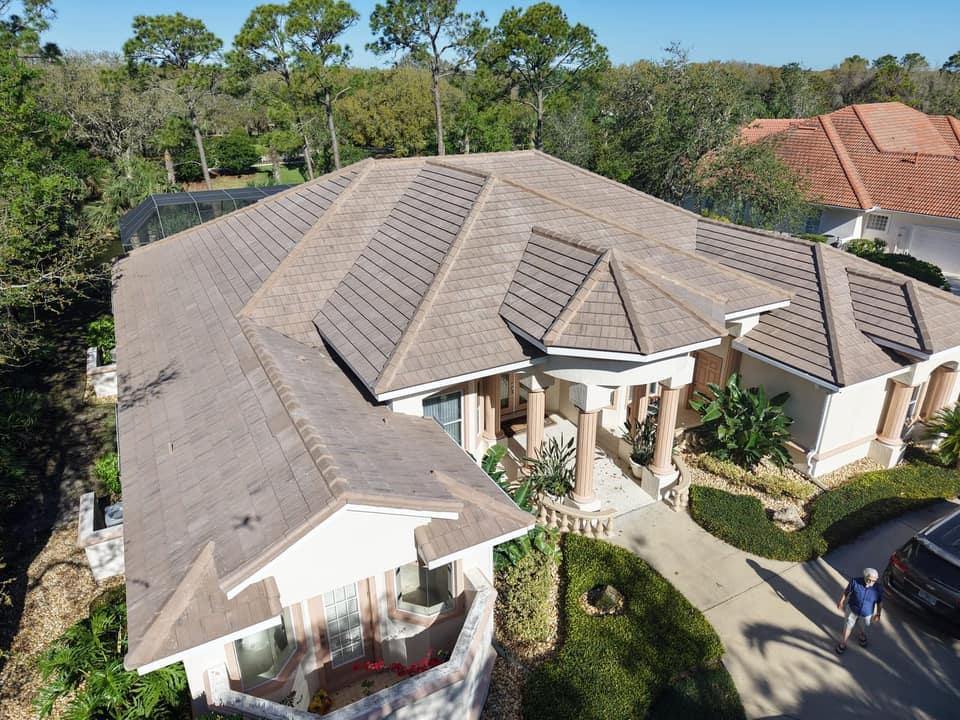
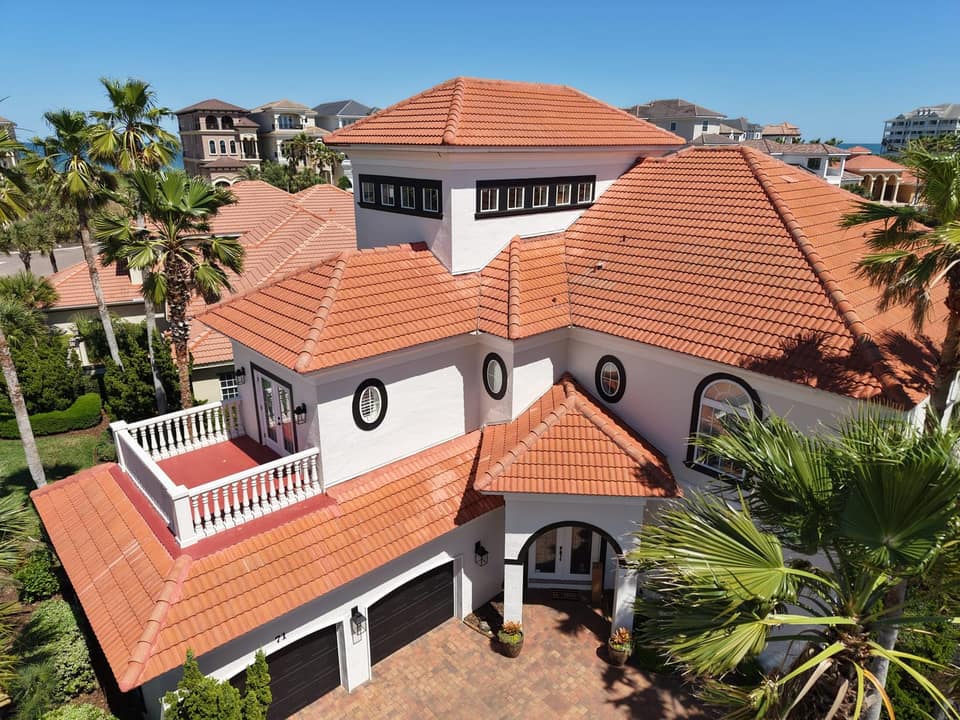
- Hammock Dunes. Gated, tile country. Our family has put down hundreds of squares of tile here, including a 7,100 square foot Westlake concrete tile roof. Five of the ten roofs we have permitted with the county since 2023 were in Hammock Dunes.
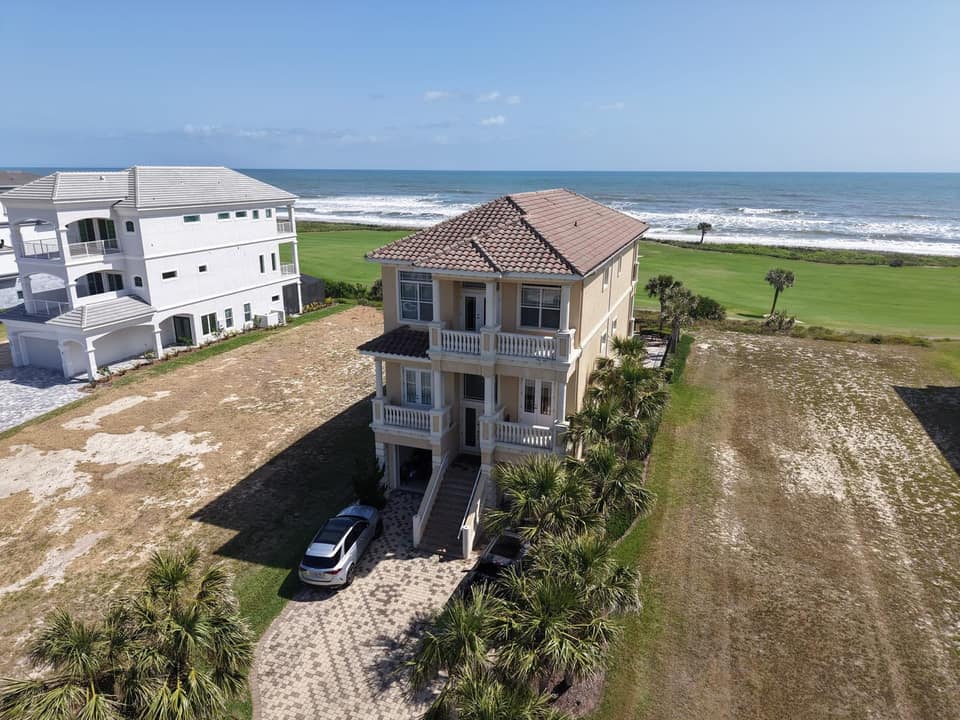
- Ocean Hammock. Tall homes on tight lots. We replaced 1,300 square feet of tile 52 feet up on one home and rebuilt a chimney 56 feet above ground on another.
- Sea Colony. Oceanfront and gated, with homes from the late 1980s. We have roofed most of Sea Colony, work that goes back before 2006.
- Painters Walk. A small oceanfront street near Painters Hill.
- Marineland Acres sits in a low basin between A1A and the dunes, with dirt roads and water that ponds for days. The county pumped its drainage system with Sea Colony’s after Nicole in 2022.
- Matanzas Shores is a gated oceanfront mix of single-family homes, townhomes and condos, including the Surf Club buildings from 2004. Beach Haven is Key West style, with porches and deeded beach access, built from about 2007 on.
- Marineland, the tiny town at the county line, runs its own building department.
Planning a roof on the island, or worried about one after a storm? Get in touch or call (386) 864-9600. We call back within one business day.